Practical IoT & Cloud Integration for SMEs: A Smarter Way to Modernise Operations
-

Ashok Kumar Singh CEO
- IoT and cloud integration for SMEsUncategorized
For small or mid-sized enterprises, the daily reality is a persistent balancing act—delivering faster, more reliable service while strictly controlling costs. It is a common misconception that the power of connected devices and high-level automation remains exclusive to large corporations, but that’s no longer true. With modern accessible cloud platforms, flexible and scalable APIs and affordable and lightweight IoT hardware, SMEs can deploy smart, integrated workflows without requiring significant capital outlay.
This guide explains how IoT and cloud-based systems work together, why they’re becoming a core part of modern business operations and how First Rite supports organizations looking to build efficient, scalable digital environments.
Table of Contents
- Why Does IoT Matter to SMEs Today
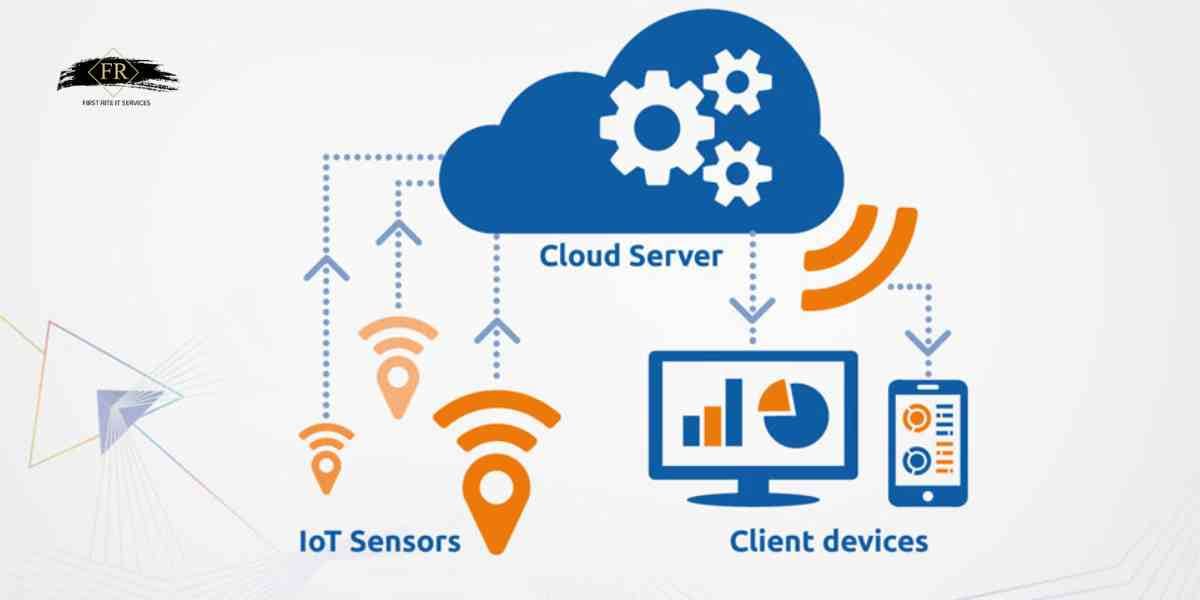
- The Core Components of IoT + Cloud Integration
- Where Do SMEs Commonly Use IoT + Cloud Systems
Why Does IoT Matter to SMEs Today?
IoT is fundamentally reshaping how SMEs interact with their physical operations. By directly connecting devices such as sensors, tracking devices, gauges, building infrastructure and inventory labels to the cloud, IoT enables your business to collect, analyze and respond quickly with real-time data. The advantages for SMEs are both immediate and financially tangible:- Significant Efficiency Gains: Automation eliminates dull, repetitive tasks in monitoring and statement generation, thereby freeing up staff personnel and reducing errors. This translates directly into streamlined processes and better utilzation of labor.
- Unparalleled Operational Visibility: IoT provides a central view of all critical assets—whether you’re monitoring stock, premises, or remote equipment. This transparent oversight is essential for maintaining control across distributed or hybrid operations.
- Reduced Downtime: The ability to predict potential oversights enables proactive alerts to deliver preventive notifications before a breakdown, thereby reducing idle time. This allows for maintenance to be scheduled instead of responded to, bypassing costly service disruptions.
- Smarter, Faster Decisions: Reliance on outdated historical records is eliminated. The constant stream of accurate, real-time insights enables faster, more-informed decisions related to stock, strategic planning & resource allocation.
- Direct Cost Savings: In addition to labor and maintenance, systems like smart energy management can optimize resource use. This results in savings on utility bills and reduced operational waste.
The Core Components of IoT + Cloud Integration
A complete IoT system typically includes four interconnected layers:1. IoT Devices & Sensors
IoT devices and sensors capture metrics, including:- Temperature
- Energy usage
- Equipment condition
- Motion
- Inventory levels
- Environmental changes
- Track asset movement across multiple sites using GPS/RFID.
- Monitor leading indicators for upkeep, such as vibration/heat/pressure.
- Capture customer footfall patterns & dwell time in retail spaces.
- Trigger automated workflows, including switching equipment on/off or sending alerts.
- Collect compliance-related data, such as food safety temperatures/humidity logs/access logs.
- Reduce manual checks by feeding measurements directly into reporting tools.
2. Cloud Infrastructure
Data is stored & processed through secure cloud computing solutions. This enables high availability & seamless access from anywhere. Modern cloud frameworks also allow SMEs to:- Scale storage and processing power based on usage, avoiding fixed infrastructure costs.
- Run analytics dashboards and automated reports without maintaining physical servers.
- Set up role-based access to restrict sensitive data.
- Manage multiple sites from a single centralized platform.
- Implement backup & disaster-recovery features built into most cloud platforms.
- Integrate IoT data with existing web or mobile systems for unified visibility & control.
3. API Development & Integration Layer
APIs bridge the gap between devices, platforms and business systems. First Rite specialises in custom API development and integration, enabling IoT tools to connect with:- CRMs
- Custom dashboards
- Web apps
- Mobile apps
- ERP systems
- Facility management platforms
4. Web & Mobile Dashboards
Custom web application development or mobile app development provides staff with real-time visibility, automated alerts, analytics and actionable insights. These dashboards can be designed to:- Provide role-specific views for operations, management, or field teams.
- Visualize data with charts/heat maps/tables for easy analysis.
- Send alerts through SMS/email/push notifications when parameters shift.
- Display predictive trends, utilization patterns and workflow status.
- Allow two-way control, allowing users to operate devices remotely.
- Integrate logs, audit trails & downloadable reports for compliance.
Where Do SMEs Commonly Use IoT and Cloud Systems?
IoT is no longer limited to large-scale factories/enterprise logistics networks. Small and mid-sized businesses across various sectors are adopting connected devices and cloud based application development as part of their digital workflows to enhance accuracy, reduce manual effort and maintain better control over day-to-day operations.Retail & eCommerce
Modern retailers use IoT to minimise stock issues, improve customer flow and reduce operational waste. Common applications include:- Smart shelves & stock sensors that identify low-stock items automatically.
- Automated inventory alerts sent directly to dashboards/mobile apps.
- Footfall tracking to understand peak hours and staff allocation needs.
- Real-time delivery monitoring for order transparency/faster fulfillment.
- Radio-frequency identification tracking to reduce shrinkage/track high-value items.
Facility & Property Management
Connected systems help facility teams gain clearer insight into asset performance and building conditions. For example, consider:- Energy-use monitoring to identify wastefulness/lower utility expenses.
- HVAC and lighting control that adjusts based on occupancy/preset schedules.
- Occupancy detection to support space planning & compliance checks.
- Maintenance alerts triggered by irregular readings or equipment performance.
- Smart water meters and leak sensors to prevent damage and reduce wastage.
Logistics & Small Fleet Businesses
IoT plays a vital role in improving delivery accuracy and operational efficiency:- Vehicle tracking with real-time location and driver behavior insights.
- Route optimisation based on traffic, load and priority deliveries.
- Cold-chain temperature monitoring for sensitive goods, such as food/pharmaceuticals.
- Load sensors that prevent overloading and improve fleet safety.
- Asset tracking for trailers, containers, or equipment moved between sites.
Small Manufacturing & Workshops
Even small-scale production environments benefit from connected monitoring tools:- Machine status tracking to identify idle time, performance dips, or faults.
- Production line monitoring for throughput, delays and workflow bottlenecks.
- Automation triggers that initiate tasks when certain conditions are detected.
- Safety alerts for environmental hazards or equipment irregularities.
- Tool and equipment tracking to manage usage and minimise loss.
Conclusion
IoT + cloud integration is no longer a luxury—it’s a practical way for small businesses to improve efficiency and stay competitive. With modular architecture and cost-effective development, SMEs can implement systems that can do the following:- Automate routine tasks.
- Enhance visibility.
- Streamline operations.
Table of Contents
Frequently Asked Questions
Q : What’s the best way to begin automating customer interactions?
Start with a process audit. Map agent workflows, identify repetitive after-call tasks and prioritise micro-interactions that are frequent, measurable and rule-based, such as CRM updates or call summaries. This ensures automation targets tasks that deliver quick, low-risk wins.
Q : How can I verify if automation is achieving its goals?
Set preliminary performance benchmarks before launching. Measures might involve typical handling duration (AHT), wrap-up time following calls (ACW), how often transfers occur and the percentage of issues fixed on the initial try (FCR). After automation is in place, contrast the outcomes with these figures to easily assess return on investment and gains in efficiency.
Q : What type of automation project should I pilot first?
Choose one micro-win with a tight scope. Effective initial offerings can be automatic call recaps, classifying conversation purpose for efficient directing, or automated creation of CRM entries. These are simple to put into practice, straightforward to assess and deliver rapid feedback mechanisms.
Q : How should automation connect with current setups?
Employ API-driven links to join automation utilities with CRMs, issue tracking systems and cloud communication services. This guarantees automated results are channelled straight into the platforms your staff already utilise, lessening intricacy and boosting acceptance.
Q : Will automation replace agents?
No, automation will not replace agents. Best-practice design keeps agents in the loop. Provide editable AI outputs such as summaries or suggested next actions. This boosts precision, fosters confidence and preserves human review. Automation ought to augment—rather than supplant—agent choices.
Q : What technical safeguards are required for responsible automation?
Key guardrails include:
- Data privacy and compliance (consent where required, encrypted transcripts, limited retention)
- Explainability features that show why automation suggested an action
- Human fallback paths so agents can override or escalate when needed
These checks maintain responsibility and moral application of AI in client processes.
Q : Does research support using automation in frontline customer work?
Yes. Both academic and industry studies indicate that automating customer-facing tasks can boost output and lessen the burden of manual labor. Nonetheless, these same sources highlight the necessity for fresh supervision protocols—implying that entities need to structure their systems from the outset to ensure traceability, data security and human oversight.
AUTHORS BIO

ASHOK KUMAR SINGH
- CEO
- First Rite IT Services
At First Rite IT Service, we dedicate to empowering businesses with cutting-edge technologies and transform their ideas into reality curing the root cause.
Need offshore development team?
First Rite is ready to assemble a team of the specialist that will cater to thw needs of your project
Schedule a meeting Need offshore development team?
First Rite is ready to assemble a team of the specialist that will cater to thw needs of your project
Schedule a meeting Need offshore development team?
First Rite is ready to assemble a team of the specialist that will cater to thw needs of your project
Schedule a meetingRelated blogs
- IoT and cloud integration for SMEsUncategorized
Practical IoT & Cloud Integration for SMEs: A Smarter Way to Modernise Operations

Our Location