GenAI Security: Protecting AI-Driven Systems in Modern Applications
-

Ashok Kumar Singh CEO
- GenAI Security
Generative AI is rapidly becoming part of modern software architecture. From customer support automation to developer copilots and internal knowledge assistants, organisations are integrating GenAI into production environments at a fast pace.
However, every AI integration introduces a new attack surface.
Unlike traditional software vulnerabilities, GenAI security risks often stem from model behaviour, data exposure, and API interactions. If not addressed early, these risks can lead to data leaks, model manipulation, and significant financial losses. In large enterprises, a single AI data exposure incident can cost well over USD 4.44 million in damages, investigations, and compliance penalties.
This makes GenAI security no longer optional. It is now a core responsibility for AppSec and engineering teams.
Table of Contents
- What Is GenAI Security
- Why GenAI Expands the Attack Surface
- 5 Common GenAI Security Risks
- Why Traditional Security Tools Fall Short
What Is GenAI Security?
GenAI security refers to the protection of applications that use large language models (LLMs), AI agents, and generative systems from misuse, data exposure, and malicious manipulation. Unlike traditional application security, GenAI security focuses on protecting:- Input prompts
- Training and fine-tuning data
- Model outputs
- User-generated interactions
Why GenAI Expands the Attack Surface?
Most GenAI applications rely heavily on APIs. Models fetch external data, interact with internal systems, and respond dynamically to user inputs. This creates new exposure points, such as:- Sensitive data retrieval via prompts
- Unauthorised API calls triggered by model output
- Indirect access to internal systems
- Third-party model dependencies
5 Common GenAI Security Risks
1. Prompt Injection Attacks
Prompt injection attacks occur when a user intentionally crafts input to manipulate model behaviour. These attacks can override instructions, expose hidden data, or trigger unintended actions. This is one of the fastest-growing concerns in LLM security today, particularly in enterprise environments where AI tools are connected to internal knowledge bases, https://firstriteitservices.com/blog/powering-digital-transformation-api-development-and-integration-services/, or automation systems. A single malicious prompt could bypass safeguards, retrieve restricted information, or alter how the system responds to future queries.2. Data Leakage
Models can unintentionally reveal:- Internal documentation
- API keys
- User data
- Proprietary knowledge
3. Model Over-Permissioning
AI tools are often given broad system access to improve productivity. If an attacker gains control through prompt manipulation, they may trigger actions across connected APIs. In practical terms, this means a model integrated with email, cloud storage, or operational tools might perform unintended tasks, such as retrieving files, sending messages, or initiating workflows, without proper verification. Over-permissioning increases the blast radius of a potential breach, turning a single compromised interaction into a wider system-level incident.4. Training Data Exposure
Improperly curated training datasets can contain sensitive information. Models may reproduce fragments of this data during generation. This risk is especially relevant when organisations fine-tune models using internal documents, customer interactions, or historical records. If confidential material is included without proper filtering, the model may later surface pieces of that information in responses. Over time, even small leaks can reveal patterns, internal processes, or commercially sensitive insights.5. Supply Chain Risks
Many teams use third-party GenAI services. Each external integration adds dependency risk, especially if API security is weak. Businesses often rely on multiple vendors for hosting, model access, plugins, and automation tools. If any one of these providers has security gaps, it can expose connected systems and data flows. Limited visibility into how third-party platforms store, process, or protect information further increases uncertainty, making vendor risk management a critical part of GenAI security planning.Why Traditional Security Tools Fall Short?
Most security tools are designed for static applications. GenAI systems behave dynamically. Challenges include:- Outputs change per interaction
- Behaviour is non-deterministic
- Testing cannot rely on fixed patterns
- Attack methods evolve rapidly
Conclusion: Securing the Future of GenAI Applications
GenAI is reshaping how modern applications are designed, developed, and deployed. However, as organisations integrate AI into business-critical workflows, new risks emerge that traditional security frameworks are not fully equipped to address. From prompt manipulation and sensitive data exposure to insecure API integrations, AI systems require continuous oversight, structured governance, and proactive protection. For businesses adopting AI-driven solutions, security must be embedded from the earliest stages of development. This includes securing APIs, controlling data access, validating inputs and outputs, and continuously testing model behaviour in real-world environments. A strong GenAI security strategy is not just about preventing breaches. It is about building resilient, reliable, and trustworthy AI-enabled systems that support long-term innovation. First Rite supports organisations in strengthening their application and infrastructure security posture by helping teams identify vulnerabilities, implement secure development practices, and build scalable, protected digital environments. As AI adoption continues to accelerate, taking a security-first approach will be critical to maintaining compliance, protecting sensitive data, and ensuring operational stability. By treating GenAI security as a core part of digital transformation rather than an afterthought, businesses can confidently leverage AI technologies while minimising risk and protecting long-term value.Table of Contents
Frequently Asked Questions
Q : How should security teams start evaluating risks in GenAI-powered features?
Security teams should begin by mapping where AI models interact with internal systems, data sources, and APIs. This helps identify potential exposure points before deployment. Early risk assessment makes it easier to apply controls without disrupting development workflows.
Q : Can GenAI introduce security risks even if it does not store data?
Yes. Even without storing data, models can still surface sensitive information through responses if they are connected to external tools or knowledge sources. The risk often comes from what the model can access, not just what it retains.
Q : Why is access control critical when integrating AI into existing systems?
If AI tools have broad permissions, a single manipulated interaction could trigger unintended system actions. Limiting access ensures the model only retrieves or performs what is necessary. This reduces the potential impact of misuse or abnormal behaviour.
Q : What operational challenges do companies face when securing AI-driven applications?
One major challenge is that AI behaviour changes based on user input, making risks harder to predict and test. Security teams must continuously monitor interactions instead of relying only on static checks. This requires ongoing coordination between engineering and security teams.
Q : How can organisations maintain user trust while scaling AI adoption?
Organisations should prioritise transparency, controlled data access, and strong validation mechanisms for AI outputs. When users feel confident that their information is handled responsibly, adoption becomes smoother. Trust becomes a key factor in long-term AI success.
AUTHORS BIO

ASHOK KUMAR SINGH
- CEO
- First Rite IT Services
At First Rite IT Service, we dedicate to empowering businesses with cutting-edge technologies and transform their ideas into reality curing the root cause.

Need offshore development team?
First Rite is ready to assemble a team of the specialist that will cater to thw needs of your project
Schedule a meeting Need offshore development team?
First Rite is ready to assemble a team of the specialist that will cater to thw needs of your project
Schedule a meeting Need offshore development team?
First Rite is ready to assemble a team of the specialist that will cater to thw needs of your project
Schedule a meetingRelated blogs

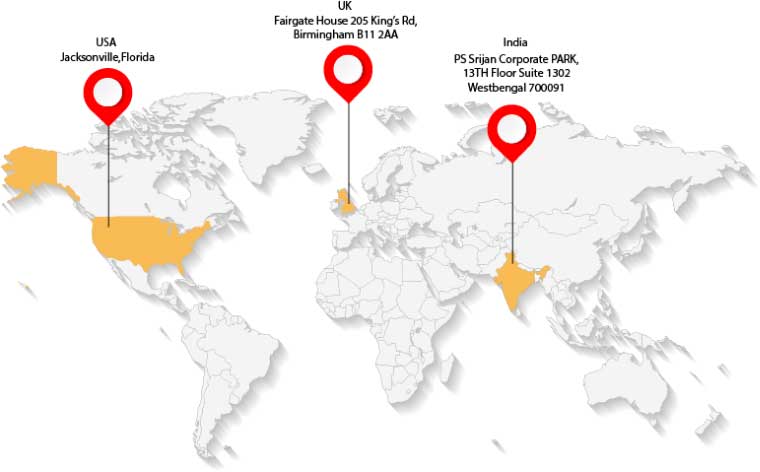
Our Location