Custom Web Portals for BPO/KPO: Why They’re Now Essential for SLA Performance & Client Transparency
-

Ashok Kumar Singh CEO
- BPO and KPO
For years, BPO/KPO operations relied heavily on:
- Manual workflows
- Fragmented spreadsheets
- Email exchanges
- Client-provided tools
Table of Contents
- Why Web Portals Are Becoming Essential in BPO/KPO
- Where Does Off-the-Shelf Software Fall Short
- Operational Problems Custom Portals Solve
- Key Features a Modern BPO/KPO Web Portal Should Include
- Why Build Custom Instead of Buying
- Cloud Architecture: A Quiet but Powerful Advantage
- How Custom Portals Improve SLA Performance
- Impact on ROI & Operational Efficiency
Why Web Portals Are Becoming Essential in BPO/KPO?
Outsourcing operations involve multi-step workflows, large teams, shifting priorities, and strict turnaround times. Yet most commercial software isn't built for the nuance of BPO/KPO environments. This mismatch creates several issues:- Frequent back-and-forth with clients for data, clarifications, or approvals
- Difficulty maintaining SLA compliance across multiple queues
- Manual tracking of volumes, ageing, TAT, and escalations
- Limited visibility into utilisation and performance
- Inconsistent quality checks
- Vulnerable spreadsheet-driven processes
- Work faster
- Reduce errors
- Avoid dependency on external systems
Where Does Off-the-Shelf Software Fall Short?
Most ready-made software platforms fail BPO/KPO operations for four key reasons, like:1) They can’t support custom workflows
Client SLAs often involve:- Conditional logic
- Multi-step approvals
- Domain-specific validations
2) They lack integration flexibility
Operations typically need connections to:- CRM and ticketing tools
- Finance and compliance systems
- Document repositories
- Vendor or client applications
3) Reporting is too generic
Outsourcing work demands very specific metrics:- Ageing buckets
- QA scores
- AHT
- Rework logs
- Exception queues
- Utilisation percentages
4) Licensing costs don’t scale well
With hundreds of users and fluctuating team sizes, subscription-based tools become expensive over time. Custom portals resolve these problems by ensuring the platform grows with the business—not the other way around.Operational Problems Custom Portals Solve
Modern web portals are helping BPO/KPO firms overcome persistent challenges:1) Reducing client dependence
Clients gain a secure interface to do the following without repeated follow-ups:- Upload tasks
- Track progress
- Provide clarifications
- Approve outputs
- Check reports
2) Improving SLA compliance
The following options prevent misses and reduce ageing:- Built-in clocks
- TAT timers
- Alerts
- Automated workflow routing
3) Reducing manual errors
The following entities significantly lower rework and inconsistencies:- Data validation
- Rule-based submissions
- Structured forms
4) Streamlining managerial oversight
Supervisors can monitor the following in real time:- Queues
- Capacity
- Productivity
- Quality checks
5) Ensuring transparency & auditability
Every step is logged:- Who worked on what
- When
- With what outcome
- Finance
- Healthcare
- Compliance-centric processes
6) Enhancing client trust
Real-time dashboards:- Strengthen relationships
- Reduce escalations
- Eliminate “visibility gaps”
Key Features a Modern BPO/KPO Web Portal Should Include
A well-designed portal supports both operational efficiency and client communication. High-performing solutions typically include:- Process-driven forms with conditional logic
- Role-based access for clients, team leads, QA, agents, and managers
- Real-time dashboards for volumes, ageing, SLA performance, and exceptions
- Integrated communication channels (notes, comments, clarifications)
- Audit trails for compliance-heavy processes
- Document and file management features
- Queue routing and assignment logic
- Capacity utilisation and workforce analytics
- Integrations via secure APIs
- Multi-tenant architecture for multi-client delivery
- Responsive web design for remote teams on laptops, tablets, and mobiles
Why Build Custom Instead of Buying?
A tailored portal is more valuable than generic software when:- Different clients require different workflow variations
- Processes involve complex approval chains
- Confidential information requires strict role-level security
- Legacy formats (Excel, CSV, PDFs) need structured input layers
- SLA commitments require automation and real-time tracking
- Teams operate across multiple shifts and time zones
Cloud Architecture: A Quiet but Powerful Advantage
Today’s portals are widely built on cloud computing solutions, which allow:- Near-zero downtime
- Faster performance for global teams
- Secure backups & disaster recovery
- Scalable infrastructure as teams grow
- Smooth deployment across multiple processes
How Custom Portals Improve SLA Performance?
Enhanced SLA management is one of the biggest reasons the industry is shifting. Real benefits include:- Fewer misses due to automated reminders and routing
- Lower ageing because tasks can’t “sit idle”
- Faster escalations based on predefined rules
- Data accuracy improvements due to controlled inputs
- Better forecasting using real-time volume & utilisation analytics
Impact on ROI & Operational Efficiency
BPO/KPO firms that adopt custom portals typically see:- 20–40% reduction in manual rework
- Faster onboarding of new agents due to structured workflows
- Improved client retention due to transparency
- Reduced dependency on client-side systems
- Lower operational leakage (missed tasks, untracked volumes)
- More accurate MI reporting
- Automate workflows
- Reduce manual errors
- Deliver predictable SLA performance
Table of Contents
Frequently Asked Questions
Q : Why are BPO/KPO firms moving away from spreadsheets to custom portals?
Spreadsheets lack version control, audit trails, and workflow automation. Portals centralise information, enforce process rules, and provide real-time visibility.
Q : Can a custom web portal support multiple clients with different workflows?
Yes, a custom web portal can support multiple clients with different workflows. Modern portals can be built with multi-tenant architecture, allowing each client to have tailored workflows, forms, SLAs, and reporting modules.
Q : How do custom portals reduce operational risk in outsourcing environments?
Portals minimise human error by:
- Enforcing validations
- Automating routing
- Keeping full activity logs that support compliance-heavy processes
Q : Do web portals integrate with existing CRMs or telephony platforms?
Most solutions use API development and integration to connect with:
- CRMs
- Diallers
- Ticketing systems
- Client tools
These help eliminate manual data transfers.
Q : Are custom portals suitable for small BPO/KPO teams?
Absolutely; custom portals are suitable for small BPO/KPO operations. Small teams benefit the most from structured workflows, automated reporting, and improved SLA tracking without relying on expensive enterprise tools.
Q : Can custom portals help manage workforce utilisation?
Yes, custom portals can help manage workforce utilisation. Built-in dashboards track:
- Capacity
- Queue load
- Agent activity
- Productivity
These allow managers to allocate work more accurately.
Q : How long does it typically take to build a custom BPO/KPO portal?
Timelines vary by complexity. However, modular web application development allows phased delivery within weeks for core features, with additional modules added over time.
Q : What security features should a BPO/KPO portal include?
Essential features include:
- Encrypted data transfer
- Role-based access controls
- Audit logs
- Secure cloud hosting
These options help safeguard sensitive client information.
AUTHORS BIO

ASHOK KUMAR SINGH
- CEO
- First Rite IT Services
At First Rite IT Service, we dedicate to empowering businesses with cutting-edge technologies and transform their ideas into reality curing the root cause.

Need offshore development team?
First Rite is ready to assemble a team of the specialist that will cater to thw needs of your project
Schedule a meeting Need offshore development team?
First Rite is ready to assemble a team of the specialist that will cater to thw needs of your project
Schedule a meeting Need offshore development team?
First Rite is ready to assemble a team of the specialist that will cater to thw needs of your project
Schedule a meetingRelated blogs
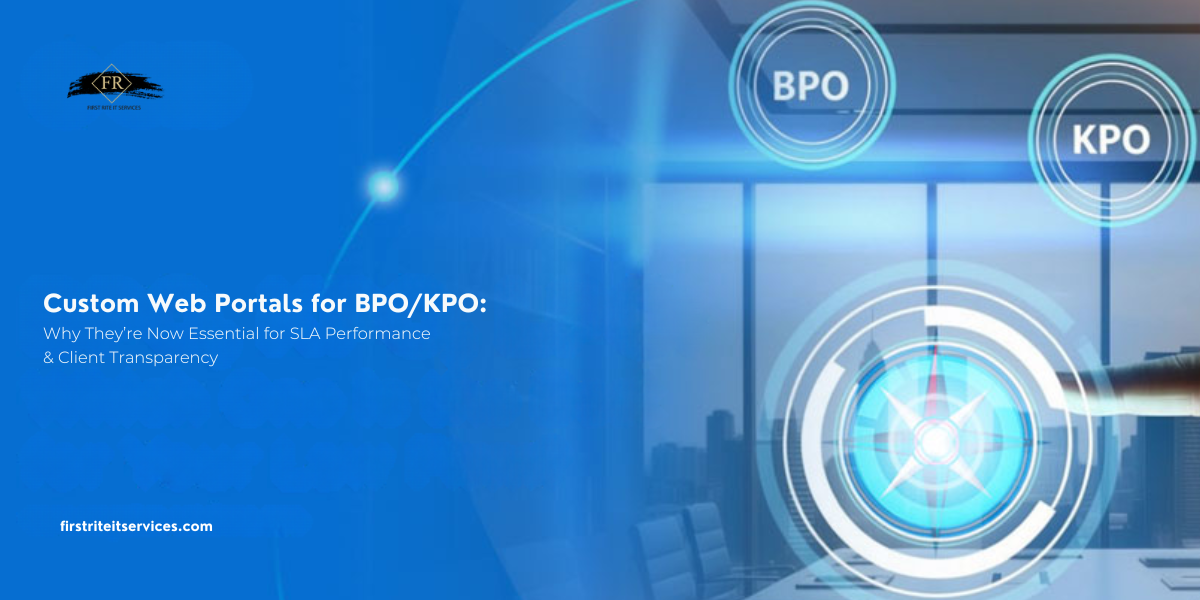

Our Location