Automation Without Overreach: Where SMEs Should (and Shouldn’t) Automate
-

Ashok Kumar Singh CEO
- business process automation for SMEs
Automation is no longer a concept reserved for large enterprises with dedicated innovation teams. Today, small and medium-sized enterprises (SMEs) are increasingly exploring automation as a way to reduce operational strain, improve consistency, and gain better visibility across their business. However, as automation tools become more accessible, a new challenge has emerged: knowing what to automate—and what to leave human-led.
For numerous small and medium-sized enterprises, automation efforts fall short not due to deficient technology, but because implementation is too sweeping, too rapid, or lacks thorough comprehension of current operational procedures.
For many SMEs, automation initiatives fail not because the technology is inadequate, but because it is applied too broadly, too quickly, or without sufficient understanding of existing workflows. Implementation failure due to poor process understanding is a recognised issue in:
- Business process automation
- ERP rollouts
- CRM and workflow tooling
Table of Contents
- Why Automation Pressure Is Growing for SMEs
- Where Automation Delivers the Most Value
- Where Should SMEs Be Cautious About Automation
- Why API-First Design Matters
- Automation as Part of Digital Transformation—not a Shortcut
- A Practical Decision Framework for SMEs
- Designing Automation That Scales Sensibly
Why Automation Pressure Is Growing for SMEs?
Several factors are driving SMEs towards automation:- Increasing administrative workload with limited staffing capacity
- Higher customer expectations around response times and accuracy
- A growing ecosystem of SaaS tools promising rapid efficiency gains
- The need for better operational insight without expanding overheads
Where Automation Delivers the Most Value?
Automation works best when applied to repeatable, rules-based processes where outcomes are predictable and measurable. In these specific domains, it serves to assist personnel instead of supplanting human judgment.Common High-Impact Use Cases
- Data synchronisation between systems: Automatically passing information between CRM/accounting/inventory platforms reduces duplication & manual errors.
- Status updates and notifications: Automated alerts for job progress/approvals/threshold breaches help teams act faster without constant checking.
- Routine administrative tasks: Scheduling, reporting, and standard record updates are well-suited to automation through cloud-based application development.
Where Should SMEs Be Cautious About Automation?
Not every process benefits from automation. Overreach often occurs when businesses attempt to automate activities that rely heavily on judgment/context/frequent exceptions.Common Pitfalls
- Automating poorly defined workflows: When a process changes considerably across instances, automation might heighten variations instead of standardising them.
- Replacing oversight with rules: Some decisions require human review, especially in customer service/compliance/financial approvals.
- Relying entirely on off-the-shelf platforms: Generic tools may not align with how an SME actually works, leading to workarounds and inefficiencies.
Why API-First Design Matters?
Sustainable automation depends on how systems communicate. An API-first approach allows SMEs to connect tools without locking themselves into rigid platforms. Through structured API development and integration, businesses can:- Share data across systems without duplication
- Replace or upgrade components without disrupting operations
- Maintain a single source of truth across applications
Automation as Part of Digital Transformation—not a Shortcut
Automation should sit within a broader framework of digital transformation consulting—not operate as a standalone initiative. Effective transformation considers:- Existing workflows and pain points
- Staff adoption and training requirements
- Data governance and access controls
- Long-term scalability and maintenance
A Practical Decision Framework for SMEs
Successful automation begins with process readiness. For SMEs, the aim shouldn't be maximising automation but automating what is consistent, reliably reproducible, and able to provide quantifiable benefits.Process Frequency and Consistency
Automation delivers the greatest return when applied to tasks that occur regularly & follow a consistent sequence. High-frequency activities such as job scheduling, data syncing, status updates, or standard notifications are strong candidates. In contrast, infrequent/highly variable processes often benefit more from simplification before any automation is introduced.Clarity of Inputs and Outputs
Automated systems rely on structured information. Each process should have clearly defined triggers, required data points, and expected outcomes. When data is partial, requires human understanding, or is heavily dependent on individual judgement, automating processes may increase variability instead of fixing it.Risk Reduction Versus Risk Amplification
Well-designed automation can:- Minimise manual errors
- Prevent missed steps
- Improve compliance
Scalability Without Constant Intervention
Automation should support growth with minimal ongoing adjustment. Processes that require frequent manual overrides, rule changes, or exception handling often indicate instability. Mature processes that can accommodate higher volumes without structural changes are better suited for automation. Visibility, Control, and Accountability Automation should enhance oversight rather than obscure it. Teams must be able to track progress, review actions taken by systems, and intervene when necessary. Clear dashboards, audit logs, and control points ensure that automation remains a support tool—not a black box. When these conditions are met, automation can improve efficiency, accuracy, and operational resilience. Where they are not, refining workflows first creates a stronger foundation for automation that genuinely supports long-term business objectives.Designing Automation That Scales Sensibly
Successful automation is incremental. SMEs benefit from modular systems built through custom software applications, where functionality can expand as needs evolve. Key principles include:- Automating one process at a time
- Monitoring impact before expanding scope
- Maintaining manual fallback paths
- Reviewing workflows periodically as the business changes
Conclusion
Automation is a powerful tool for SMEs, but only when applied with restraint and clarity. Businesses can achieve meaningful efficiency gains without overengineering their operations. They can:- Focus on high-impact processes
- Maintain human oversight where necessary
- Design systems that integrate cleanly
Table of Contents
Frequently Asked Questions
Q : How do SMEs know if a process is ready for automation?
A process is usually ready when it is clearly documented, follows consistent steps, and produces predictable outcomes. If staff frequently improvise or override rules, automation should wait.
Q : Does automation always require custom software development?
No. Some needs can be met with existing tools. Custom development becomes relevant only when workflows, integrations, or reporting requirements fall outside standard platform capabilities.
Q : Can automation increase operational risk if implemented poorly?
Yes. Poorly designed automation can create blind spots, duplicate actions, or compliance issues. This is why testing, monitoring, and human oversight remain essential.
Q : How long does it typically take to see value from automation?
For focused use cases, SMEs often see measurable improvements within weeks rather than months. Broader automation programmes take longer but deliver cumulative benefits over time.
Q : Will automation reduce the need for staff?
In most SME environments, automation reduces manual workload rather than headcount. Staff time is typically redirected towards higher-value or customer-facing activities.
Q : How does automation affect data accuracy?
When configured correctly, automation improves accuracy by reducing manual entry. However, it depends on clean input data and well-defined validation rules.
Q : Can automation scale as the business grows?
Yes. Automation can scale as the business grows only if it is built using modular systems & API-based integrations. Scalability should be considered from the outset to avoid future rework.
Q : Is automation suitable for customer-facing processes?
Automation is not completely suitable for customer-facing processes. It works well for notifications, updates, and routing, but customer decisions and complex issues should still involve human judgment.
AUTHORS BIO

ASHOK KUMAR SINGH
- CEO
- First Rite IT Services
At First Rite IT Service, we dedicate to empowering businesses with cutting-edge technologies and transform their ideas into reality curing the root cause.

Need offshore development team?
First Rite is ready to assemble a team of the specialist that will cater to thw needs of your project
Schedule a meeting Need offshore development team?
First Rite is ready to assemble a team of the specialist that will cater to thw needs of your project
Schedule a meeting Need offshore development team?
First Rite is ready to assemble a team of the specialist that will cater to thw needs of your project
Schedule a meetingRelated blogs
- business process automation for SMEs
Automation Without Overreach: Where SMEs Should (and Shouldn’t) Automate
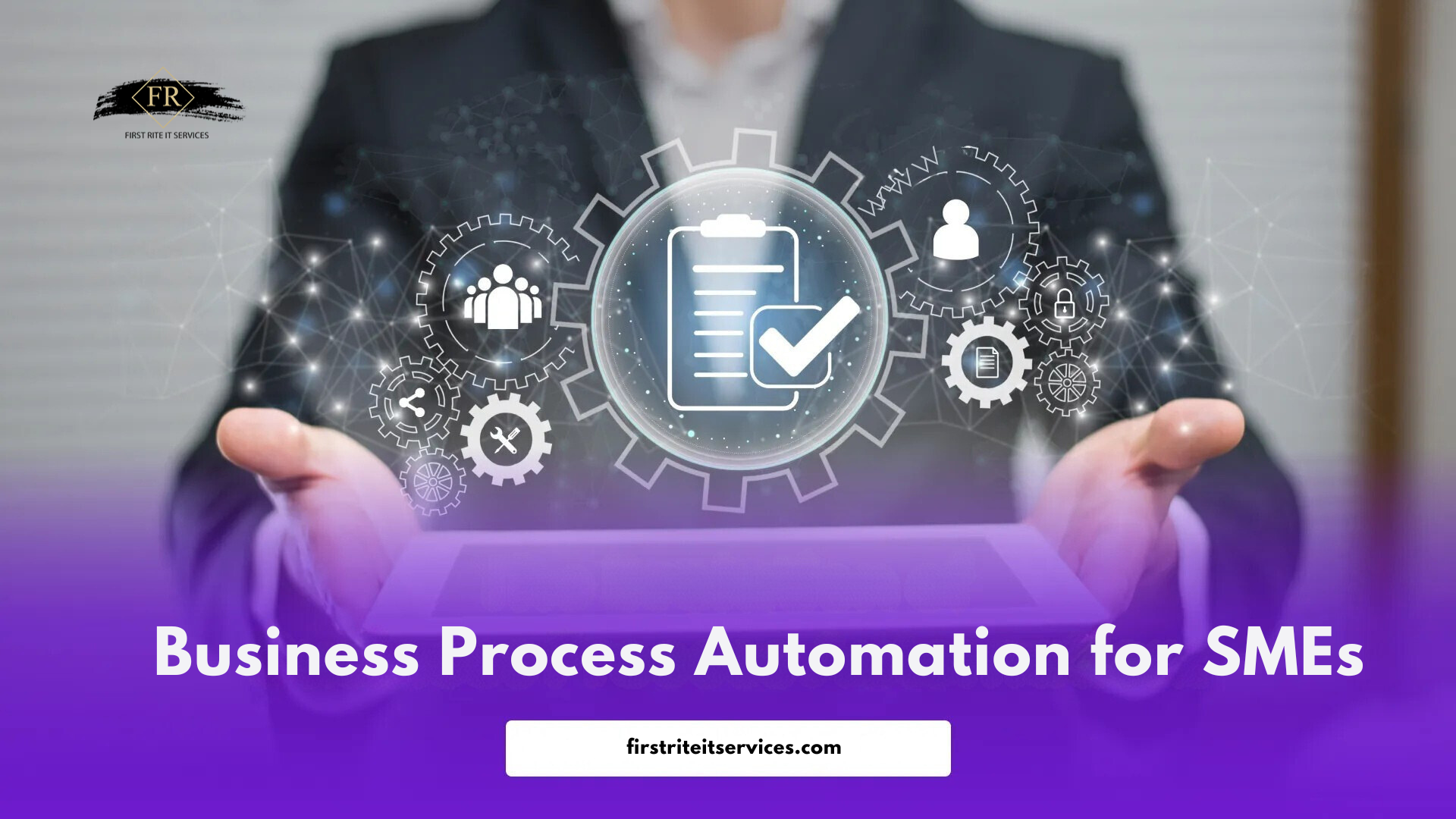

Our Location